
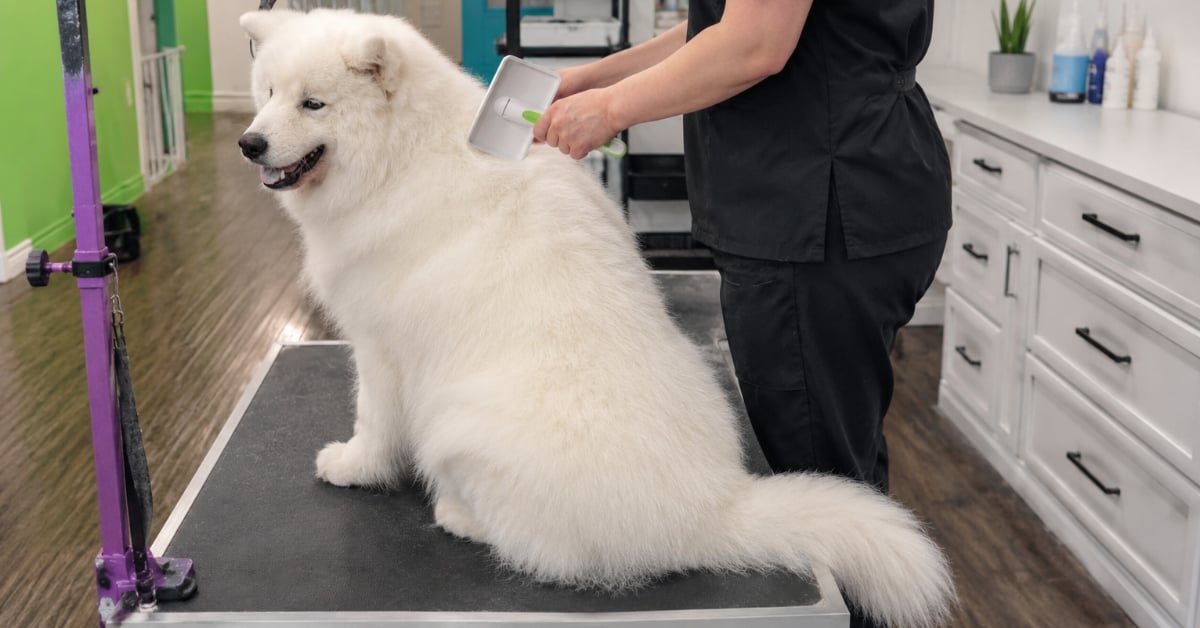
One of the most common questions among dog owners is how often should you groom your dog? and the honest answer is that it depends. Grooming frequency is not one-size-fits-all. It varies based on your dog’s coat type, breed, activity level, and even the season. Some dogs need professional attention every four weeks; others can comfortably go eight weeks between visits.
Many owners are unsure whether they are grooming too often, not enough, or simply following the wrong routine for their specific dog. Getting this right matters more than most people realise — not just for appearance, but for coat health, hygiene, and your dog’s overall comfort.
This guide will walk you through the ideal dog grooming frequency for different coat types, how often dogs should be bathed, when to book professional appointments, and the signs that tell you your dog is overdue for a groom. By the end, you will have a clear, practical grooming schedule to follow.
Why Regular Grooming Is Important for Dogs
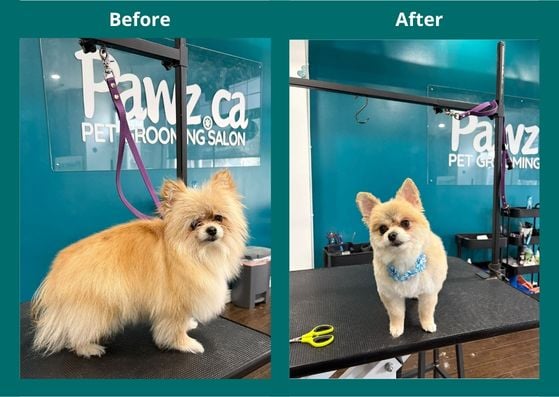
Regular grooming is far more than keeping your dog looking its best. A consistent dog hygiene routine supports coat health, reduces discomfort, and helps you catch potential issues early before they become serious problems.
Here is what a regular grooming routine for dogs actively supports:
- Coat health — regular brushing distributes natural oils and prevents dryness
- Preventing mats in dogs — especially important for long-haired and curly-coated breeds
- Controlling shedding — particularly during shedding season grooming peaks
- Early detection of skin irritation, lumps, or parasites during handling
- Nail and ear health — often overlooked but essential parts of dog coat maintenance
- Comfort and familiarity — dogs that are groomed regularly become more relaxed with handling over time
A dog that is groomed consistently is not just cleaner — it is more comfortable, healthier, and easier to manage at home and in a professional salon. Think of regular dog grooming as part of your dog’s overall wellness routine, not just an occasional treat.
How Often Should Different Dogs Be Groomed?

The most important factor in determining dog grooming frequency is coat type. Each coat type has different maintenance needs, and understanding yours will help you build the right routine. Below is a practical breakdown by coat category.
Short-Haired Dogs

Breeds like Beagles, Boxers, Dalmatians, and Labrador Retrievers have low maintenance coats that require less frequent professional grooming. However, short-haired dog grooming still matters — these dogs shed regularly and benefit from brushing to remove loose hair and keep skin healthy.
- Professional grooming: every 6–8 weeks
- At-home brushing: once or twice per week
- Nail trimming: every 4–6 weeks
Recommended professional visit: every 6–8 weeks.
Long-Haired Dogs

Breeds such as Shih Tzus, Yorkshire Terriers, Afghan Hounds, and Maltese have coats that grow continuously and require more attentive care. Long-haired dog grooming frequency is higher because without consistent maintenance, their coats matt quickly and become uncomfortable.
- Professional grooming: every 4–6 weeks
- At-home brushing: daily or every other day
- Trimming and de-tangling: as needed between visits
Recommended professional visit: every 4–6 weeks
Double-Coated Dogs

Breeds like Golden Retrievers, Huskies, German Shepherds, and Border Collies have a dense undercoat beneath their outer coat. Double coat grooming requires specific attention — particularly during seasonal shedding periods when the undercoat blows out heavily and regular de-shedding becomes essential.
- Professional grooming: every 6–8 weeks, more frequently during shedding season
- At-home brushing: 2–3 times per week, daily during shedding season grooming peaks
- De-shedding treatments: recommended at each professional visit
Recommended professional visit: every 6–8 weeks
Curly-Coated Dogs

Poodles, Labradoodles, Bichon Frises, and similar curly coat grooming breeds are among the highest-maintenance when it comes to professional care. Their coats do not shed in the traditional sense — instead, loose hair gets trapped and mats form quickly without consistent grooming.
- Professional grooming: every 4–6 weeks without exception
- At-home brushing: every 2–3 days minimum to prevent mats
- Coat trimming: required at every professional visit
Recommended professional visit: every 4–6 weeks
How Often Should Dogs Be Bathed?
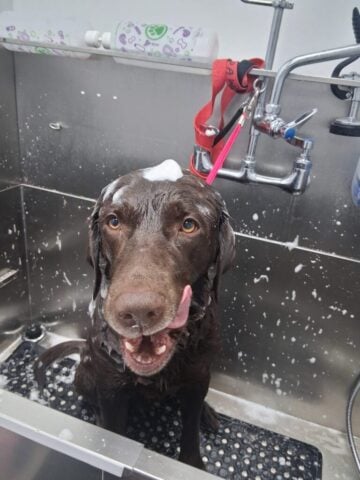
Bathing is one part of the grooming picture, but it is not the same as a full grooming session. A bathing schedule for dogs should be guided by activity level, coat type, and skin condition — not just calendar dates.
As a general rule, most dogs benefit from a bath every 4–6 weeks. Active outdoor dogs or dogs with skin conditions may need bathing more frequently, while some healthy dogs with short coats may comfortably go 6–8 weeks.
A few important points to keep in mind:
- Over-bathing may strip natural oils from the coat and dry out the skin — more frequent does not always mean better.
- Active dogs grooming needs are higher — dogs that spend time outdoors, swim, or roll in the grass will naturally need more frequent baths.
- Dogs with sensitive skin or allergies may need specific shampoos — always follow vet guidance in these cases.
- Coat type plays a role — curly and long-haired breeds may need more regular bathing as part of their overall healthy dog coat care routine.
When in doubt, a professional groomer is a reliable resource for advising on the right bathing schedule for your specific dog’s needs. Grooming visits typically include a bath, so regular appointments naturally keep this on track without guesswork.
Signs Your Dog May Need Grooming
Even with a routine in place, it helps to know the signs that your dog is overdue for a groom. These are the most common indicators to watch for:
A few important points to keep in mind:
Matted or tangled fur:
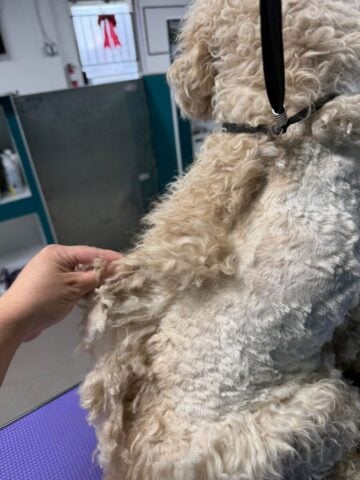
Knots that cannot be brushed out easily — a sign grooming is overdue, especially in long or curly coats.
Excess shedding:

More hair than usual on furniture and clothing can signal that a de-shedding treatment is needed.
Long or clicking nails:

If you can hear nails on the floor, nail trimming frequency for dogs suggests they are overdue for a trim.
Odour buildup:
A persistent smell even after brushing is usually a sign that a bath and full groom are needed.
Dirty or waxy ears:

Buildup in the ear canal is a hygiene concern that a professional groomer will check and address.
If you are noticing two or more of these signs at once, it is a strong indicator that your current grooming schedule needs adjusting. These signs are easy to miss gradually — which is exactly why a consistent routine matters.
How Professional Grooming Helps Maintain a Healthy Coat?

At-home brushing and bathing are valuable, but they are not a full replacement for professional grooming. A professional groomer brings tools, training, and coat-specific expertise that keep your dog’s coat in genuinely healthy condition between visits.
- A professional grooming session typically covers:Full coat brushing and de-tangling tailored to coat type
- De-shedding treatments for double-coated and heavy-shedding breeds
- Nail trimming carried out safely and correctly
- Ear cleaning to prevent buildup and reduce the risk of infection
- Coat trimming and styling based on breed standards or owner preference
- A general once-over that can flag early signs of skin issues or irritation
At Pawz Grooming Salon, our grooming teams in Kitchener and Milton Salon work with all coat types — from short-coated breeds that need a quick tidy to high-maintenance curly or double coats that require specialist handling. Whether you are looking for dog grooming in Kitchener or dog grooming in Milton, the focus is always on coat health and your dog’s comfort throughout the session.
Creating the Right Grooming Schedule for Your Dog

Building a grooming schedule that works starts with understanding your dog’s specific needs.
Here is a simple reference to help you plan:
- Brushing at home: 2–7 Per week, depending on coat type
- Bathing: 4–6 weeks – Adjust for activity level and skin condition
- Nail trimming: 4–6 weeks – More often for very active dogs
- Professional groom: 4–8 weeks- Based on coat type and breed needs
Active outdoor dogs and dogs with longer or curly coats will generally sit at the more frequent end of these ranges. Seasonal dog grooming also plays a role — during shedding season, increase brushing frequency and consider additional de-shedding treatments at your professional visits.
Consistency is the most important factor. A dog that is groomed on a regular schedule is easier to manage, more comfortable with handling, and less likely to develop coat or skin issues over time. Building the routine early — and sticking to it — makes every grooming session smoother for both you and your dog.
Frequently Asked Questions
-
Most dogs benefit from a professional grooming visit every 4–8 weeks, depending on coat type and breed. Long-haired and curly-coated breeds typically need appointments every 4–6 weeks, while short-haired breeds can often go 6–8 weeks between visits. Your groomer can recommend the right schedule for your dog.