
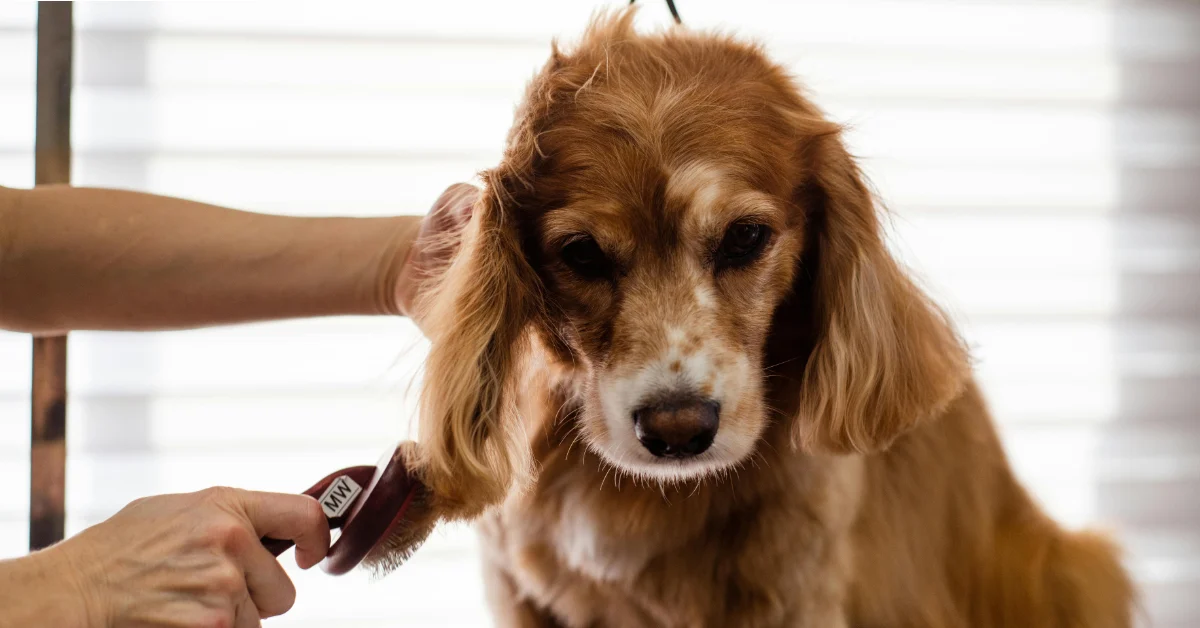
Bringing home a new puppy comes with a lot of exciting firsts and grooming a puppy is one of the most important habits to build early. Many new pet owners are unsure about the right time to start, or whether their puppy is even ready. It is a completely understandable concern.
The truth is, early grooming plays a significant role in your puppy’s comfort, hygiene, and long-term behaviour around handling. When introduced at the right age and in the right way, grooming becomes a positive routine rather than a stressful one.
This puppy grooming guide will walk you through the right starting age, the signs that your puppy is ready, what to expect during the first session, and how to keep the experience calm and comfortable every step of the way.
Why Early Grooming Matters for Puppies?
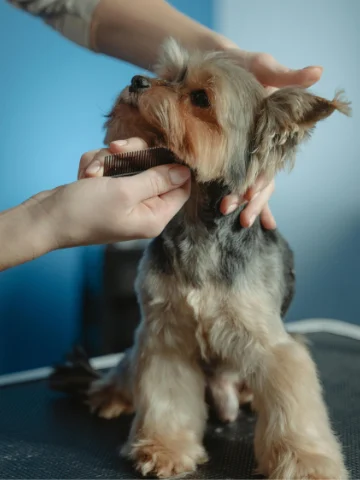
Starting grooming young dogs early is one of the most thoughtful things a pet owner can do. Puppies that are introduced to grooming during their early developmental weeks are far more likely to remain relaxed and cooperative throughout their lives — whether at home or in a professional salon.
Early grooming sessions help puppies become comfortable with being touched — their paws, ears, coat, and face. This kind of handling familiarity is essential not just for grooming, but for vet visits and everyday care too.
From a practical standpoint, regular grooming from a young age supports coat health, prevents matting, and keeps ears and nails in good condition. Think of it as part of an overall wellness routine. A good puppy grooming guide will always emphasise that starting early makes the process easier — and much more enjoyable — for both the pet and the owner in the long run.
What Is the Right Age to Start Grooming a Puppy?
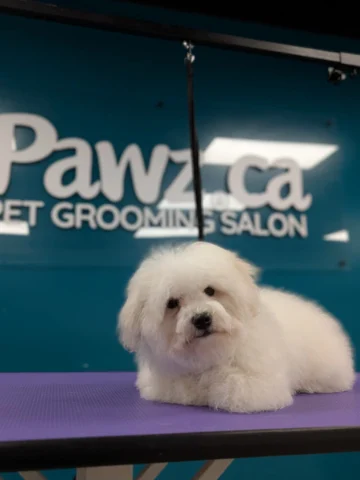
Most puppies are ready for their first grooming session around 8 to 12 weeks of age, once they have received their initial vaccinations. Always consult your vet before booking a professional appointment.
When it comes to puppy first grooming age, the general consensus among groomers and vets is that 8–12 weeks is the ideal window to begin — provided the puppy has had their early vaccinations. This timing aligns with a critical socialisation period, making puppies more open to new experiences and environments.
Timing can also vary by breed and coat type. Here is a quick reference:
- Long-haired breeds (Golden Retrievers, Shih Tzus) — begin gentle at-home brushing as early as possible, professional grooming from 8–10 weeks
- Curly or double-coated breeds (Poodles, Doodles) — early professional introductions are especially important to prevent matting
- Short-coated breeds (Beagles, Boxers) — less intensive grooming needs, but early handling still matters for comfort
Setting a consistent puppy grooming schedule from the early weeks helps establish familiarity. Even gentle at-home brushing between visits contributes significantly to building a relaxed, well-adjusted pup.
Signs Your Puppy Is Ready for Grooming
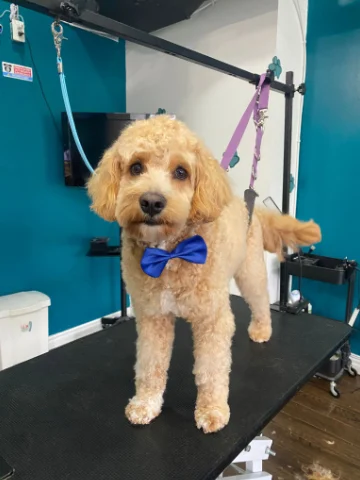
Before booking that first appointment, it helps to know whether grooming is safe for puppies at your pup’s current stage. Here are four key signs your puppy may be ready:
Comfortable with touch
Your puppy allows gentle handling of their paws, ears, and face without excessive fussing or retreating.
Socialised with people
They are comfortable around unfamiliar adults and respond well to calm, confident handling.
Calm during handling
They can settle briefly when held or gently restrained — a key indicator for safe grooming.
Coat is developing
Their puppy coat is growing in and beginning to need basic maintenance, brushing, or a bath.
Handling young puppies carefully and observing these cues will help ensure that the first visit is a positive one. If your pup seems anxious or overly reactive to touch, spend more time on gentle at-home handling before moving to a professional setting.
How to Introduce Your Puppy to Grooming?
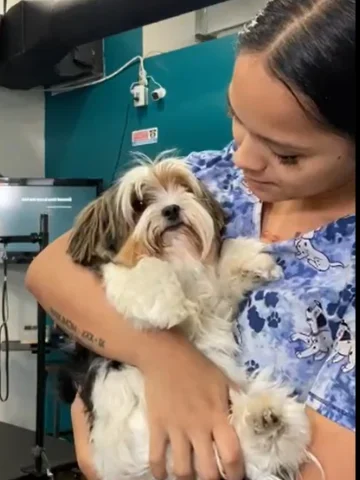
Introducing a puppy to grooming is all about patience and building positive associations. The goal is never to rush, it is to build trust, one gentle session at a time. Here is a simple approach to grooming training for puppies:
- Start with touch familiarity:
Let your puppy sniff the brush first. Run your hands gently over their coat, paws, and ears daily so that touch feels normal and safe. - Keep early sessions short:
Just a few minutes at a time. Brevity reduces stress and keeps the experience positive — especially in the early weeks. - Use positive reinforcement throughout:
Calm, quiet praise and small rewards help your puppy associate grooming with good things rather than discomfort. - Be consistent, not intense:
A little every day — a gentle brush or a paw check — is far more effective than longer, infrequent sessions for calm puppy grooming.
By the time your puppy visits a professional groomer, they will already have a baseline of trust and comfort that makes the appointment much smoother.
What Happens During a Puppy’s First Grooming Session?
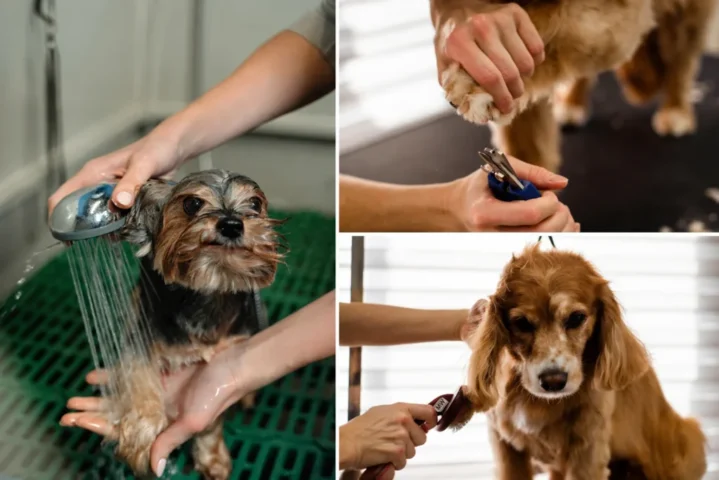
For many first-time puppy owners, not knowing what to expect can add unnecessary worry. The good news is that a puppy grooming first time appointment is intentionally gentle and introductory — it is not a full styling session.
A typical first visit focuses on familiarising your puppy with the grooming environment. This usually includes a warm, gentle bath using a puppy-safe shampoo, light brushing to get them used to the sensation, basic nail trimming, and a gentle ear check. The emphasis throughout is on puppy grooming safety — every step is carried out at the puppy’s pace, with comfort as the first priority.
A skilled groomer will take cues from the puppy’s behaviour, pausing when needed and keeping the atmosphere relaxed. The aim is simple: help your puppy leave their first session feeling calm and positive, so that every visit after that becomes progressively easier and more familiar.
How Often Should You Groom a Puppy?
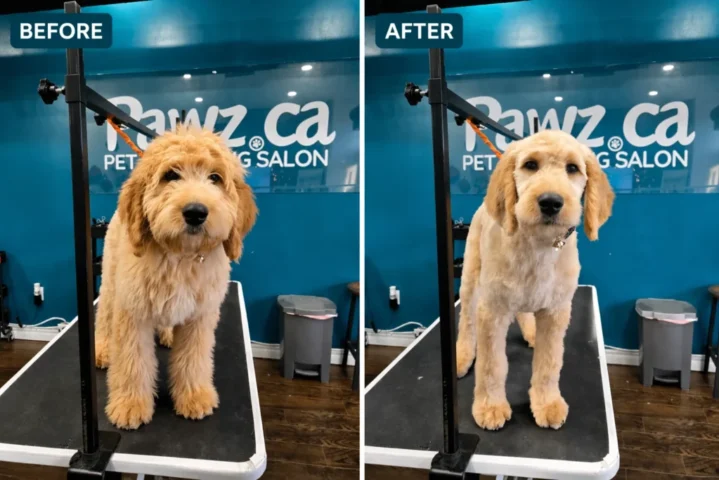
Grooming frequency depends largely on your puppy’s coat type. Here is a simple reference:
Short coats (Every 6–8 weeks)
Breeds like Beagles, Boxers, and Dalmatians need less frequent professional visits but still benefit from regular brushing.
Long or curly coats (Every 4–6 weeks)
Breeds like Beagles, Boxers, and Dalmatians need less frequent professional visits but still benefit from regular brushing.
Breeds like Poodles, Shih Tzus, and Doodles require more frequent grooming to prevent matting and maintain coat health.
Regardless of coat type, following a consistent puppy coat care routine — including at-home brushing between appointments — builds familiarity and keeps grooming stress-free. Knowing how often to groom a puppy for your specific breed is a great question to raise with your professional groomer at the first visit.
Choosing the Right Groomer for Your Puppy
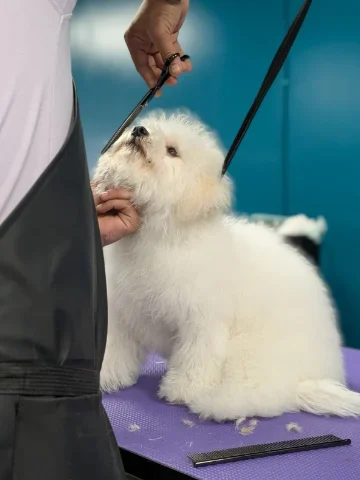
Not every grooming salon has experience working with young puppies — and that difference matters significantly. When choosing a groomer for your puppy’s first visit, here is what to look for:
- Specific experience handling young puppies, not just adult dogs.
A clean, calm, and welcoming salon environment. - Transparent communication. A good groomer will explain what they plan to do and how.
- Willingness to welcome your questions before and after the session.
- Positive reinforcement techniques and a clear focus on comfort over speed.
Choosing an experienced grooming team can make all the difference for your puppy’s first visit. At Pawz, our team in Kitchener and Milton is experienced in working with young dogs, making each session as calm and comfortable as possible. Whether you are local to Kitchener or searching for trusted puppy grooming in Milton, our groomers are here to ensure your puppy’s very first experience sets the right tone for a lifetime of easy, stress-free grooming.
Frequently Asked Questions
-
Most puppies are ready for their first professional grooming session between 8 and 12 weeks of age, following their initial vaccinations. Some groomers recommend waiting until after the second round of vaccines. Always check with your vet and groomer to determine the right timing for your specific breed.